Most descriptions of an outreach programme are written for funders. They describe aims, outcomes and impact, in that order, and they leave out the thing a sixteen-year-old actually wants to know, which is: what will the first morning be like, and will I be the only one who doesn’t understand?
This article is the other kind of description. It sets out what our summer school actually consists of — the eight days, the rooms, the timetable, the equipment, the money — for anyone deciding whether to apply, whether to volunteer, whether to fund it, or whether to build one of their own.
- Two weeks, Monday to Thursday
- 8 daysTwo weeks, Monday to Thursday10:00 to 16:30, at the UCL Department of Physics & Astronomy
- Places each year
- 30Places each yearIn 2025 we received 315 applications for them
- Cost to any student
- £0Cost to any studentTravel across TfL Zones 1–6, lunch and all materials are covered
Where it came from
The programme did not start as a refugee project. Since 2016, a group of students and academics at UCL had been running summer schools that gave pupils from London state schools a chance to see the research happening at the London Centre for Nanotechnology — a multidisciplinary institute working at the front edge of science and technology — and in the UCL Department of Physics.
It opened up to recently arrived young forced migrants, refugees and asylum seekers because the organisers kept meeting the same problem: a cohort of young people who, in their own words, were lost in the GCSE vacuum because of their lower English level. By 2019 the course ran for two full weeks and forty participants were signed up.
Everything since has been an attempt to make that fortnight work harder.
The shape of a day
Every day runs 10:00 to 16:30. That start time is deliberate. Students travel in from across Greater London — several from outside Zone 4 — and a 09:00 start would mean leaving home in the dark end of the rush hour with a journey they are paying for out of an allowance that does not stretch.
The day splits cleanly in two.
| Time | What happens | Why it is there |
|---|---|---|
| 10:00–10:20 | Arrival, registration, breakfast items | A soft start; nobody is late on their first day in an unfamiliar building |
| 10:20–12:30 | English for Science, in small groups set by level | Writing, speaking, listening and reading, with the vocabulary the afternoon will use |
| 12:30–13:15 | Lunch, provided | Eating together is not a break from the programme; it is where the cohort forms |
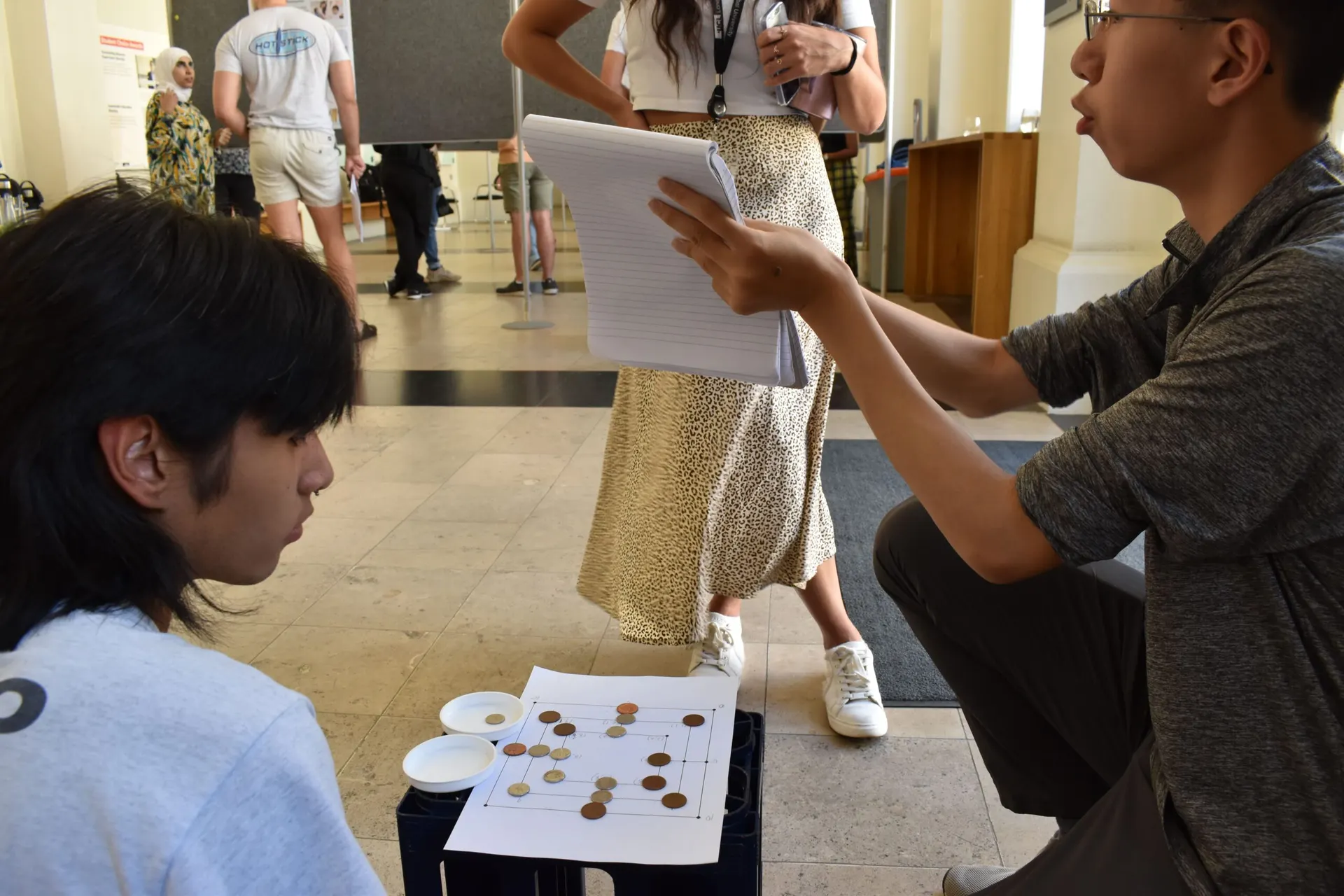
| 13:15–16:00 | Practical workshop — physics, chemistry, biology, or IT and coding | Hands on equipment, in groups, with a demonstrator per group |
| 16:00–16:30 | Wrap-up, questions, tomorrow’s plan | Time for the questions nobody asks in front of the room |
Splitting the day is the single most important design decision in the programme, and it is the one most often got wrong elsewhere. The temptation is to fold language teaching into the science: teach the experiment, and let the vocabulary come along for the ride. It does not work. A student asked to acquire the passive voice and the concept of activation energy in the same forty minutes acquires neither.
The morning: English for Science
Groups are small and assigned by level following a short assessment on day one. An English teacher works on writing, speaking, listening and reading — but with content drawn from the science the students will meet after lunch.
The gap this closes is specific. Conversational English and scientific English are different registers. Scientific English is dense with nouns that are also verbs, with hedged claims, with words that carry a technical meaning wholly different from their everyday one. Solution. Precipitate. Yield. Displacement. Significant. A student can be fluent enough to argue with a friend and still unable to parse an exam question.
By the end of the fortnight the morning work has fed into an academic poster, which is the last afternoon’s centrepiece.
The afternoon: the science
Afternoons rotate through the disciplines. The activities change year to year with the volunteers available, but the spine has been stable:
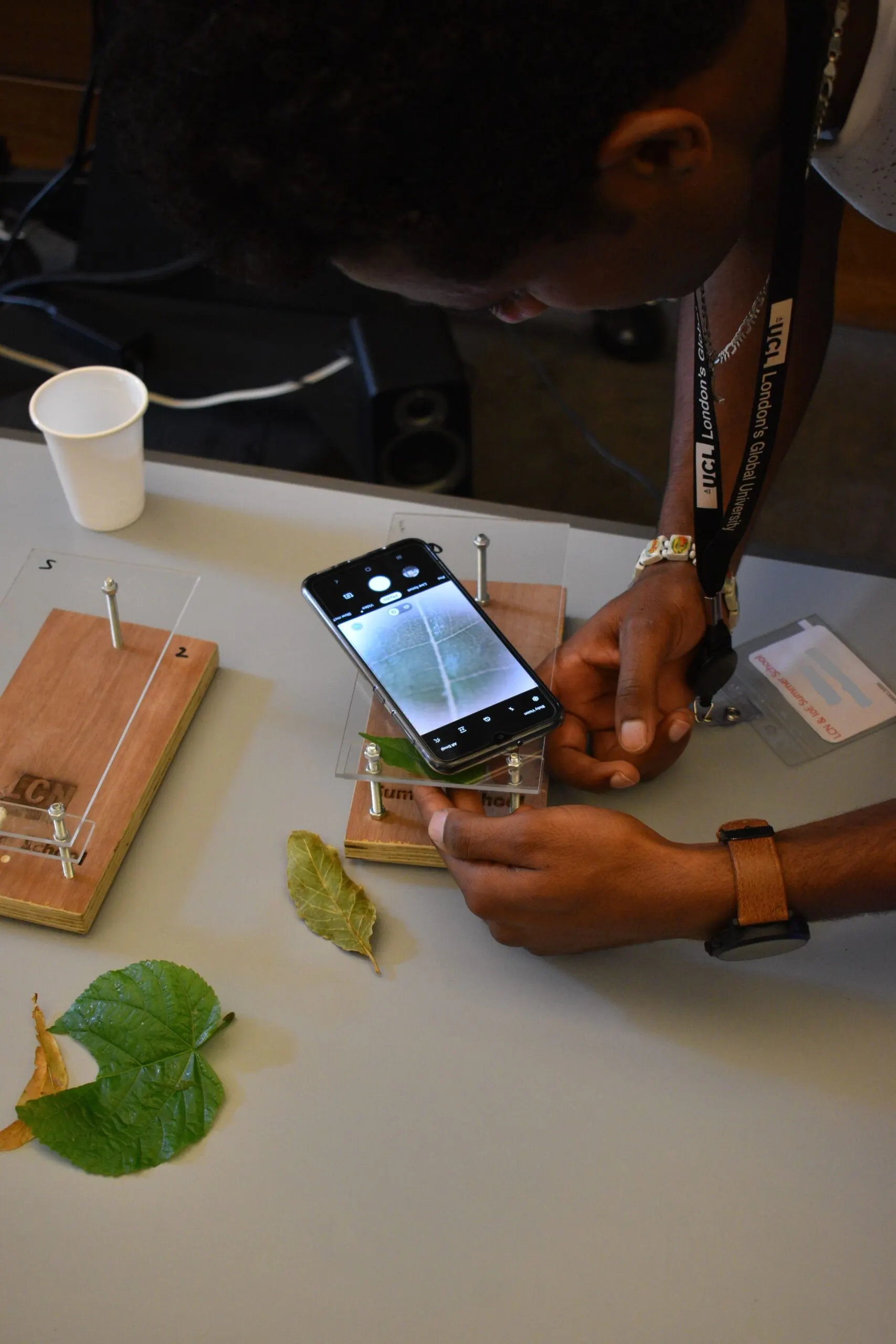
Biology. Extracting DNA from fruit — a genuinely startling demonstration, because the DNA is visible, in the tube, in quantity, from a strawberry someone brought in. Microscopy, where students prepare their own slides and compete to capture the best image. One of our students won that competition and still talks about it.
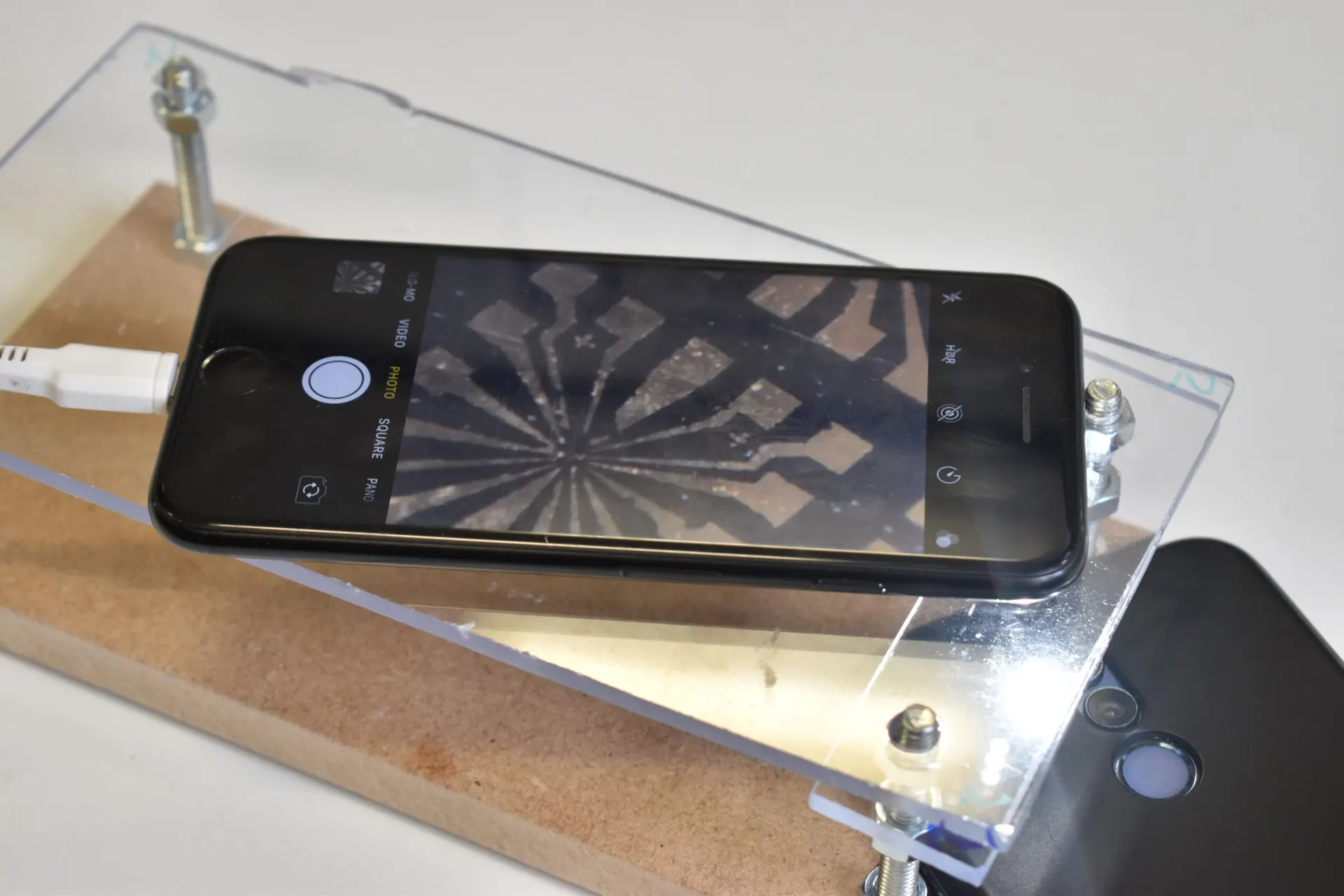
Physics. Building a working microscope from components. Optics, lasers, and demonstrations pulled straight from the department’s own outreach kit.
Chemistry. Reaction rates, indicators, the everyday chemistry that GCSE covers and that a student who joined the system at sixteen has never been taught.
IT and coding. Programming and controlling a friendly programmable robot. Also, and less glamorously but just as usefully: Word, Excel and PowerPoint, creating an email address, and building a CV. Several of our students had never had an email address of their own before the summer school.
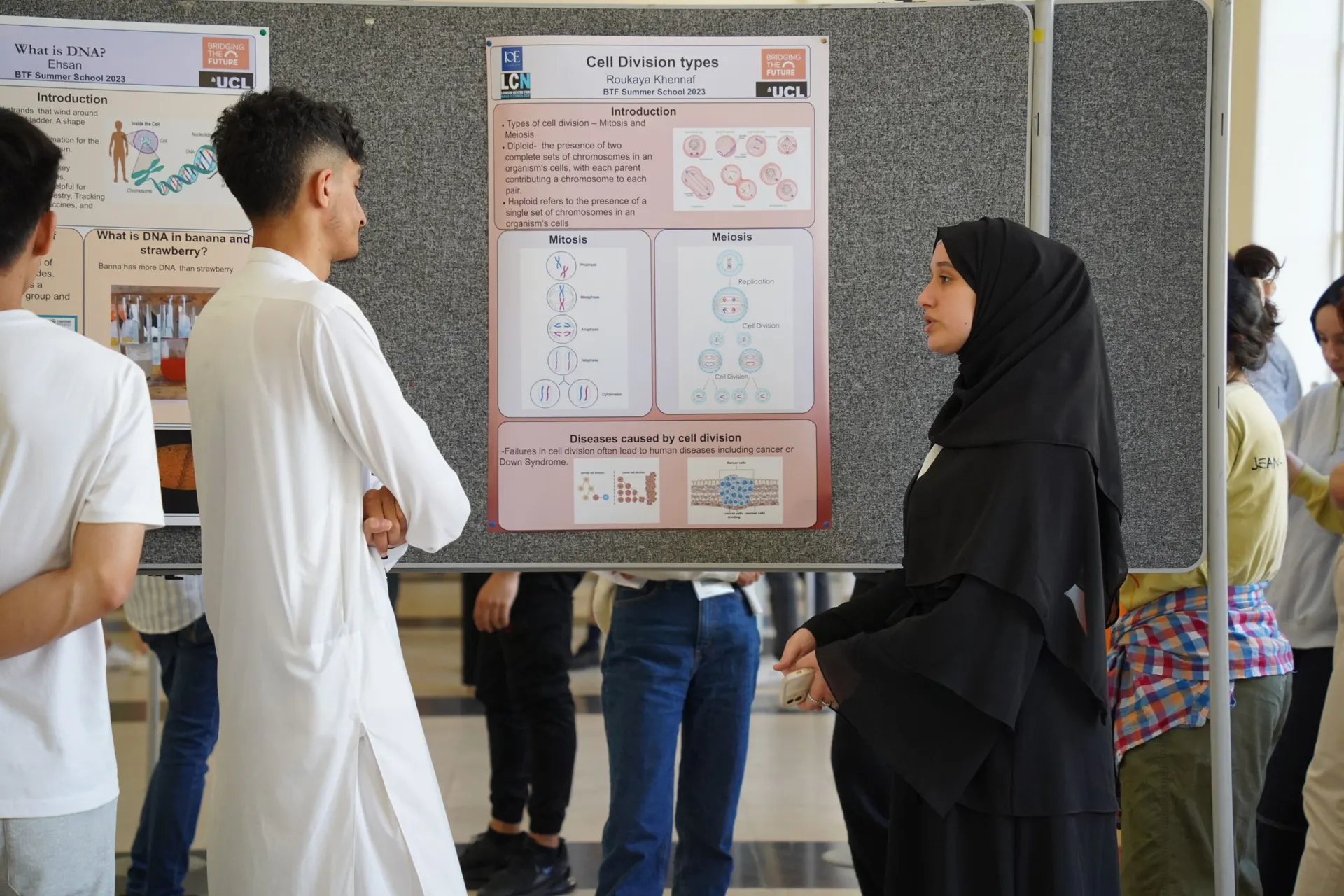
The equipment matters more than it sounds. These are real teaching labs in a real physics department, and the students are trusted with the kit. A young person who has spent a year being processed — assessed, placed, interviewed, moved — is handed a pipette and told to get on with it. The signal that sends is not subtle, and it is the point.
The last afternoon
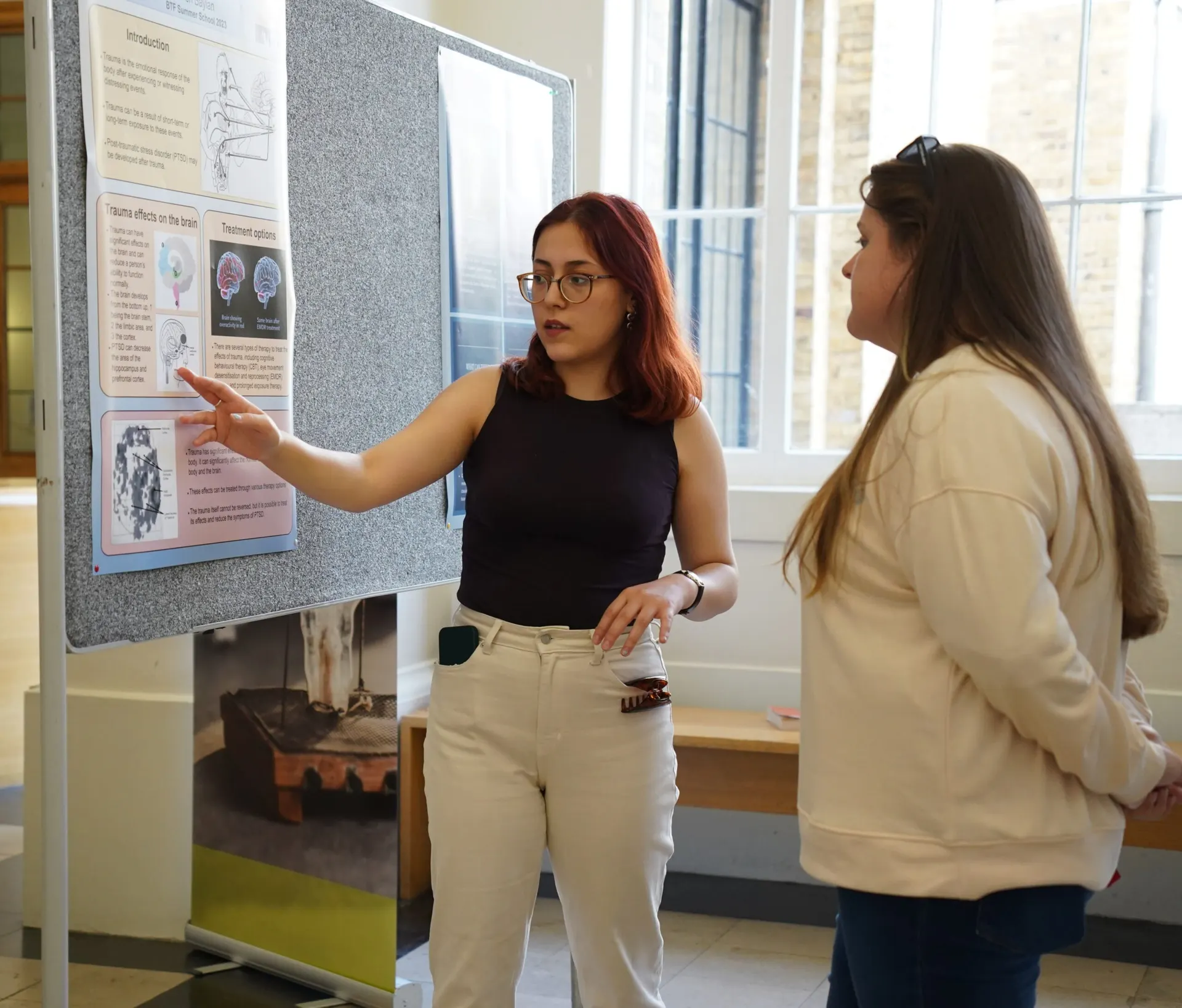
The fortnight ends with poster presentations in UCL’s North Cloisters. Each student chooses a subject, prepares an academic poster over the second week, and stands next to it while academics, students and passers-by ask them about it.
One of our students described what that was like:
My favourite part was the last project where we prepared academic posters of our chosen subject. As we were presenting them in the North Cloisters, many academics and students were interested and it was a good experience to explain a topic to an academic in that field, because I could also learn more from them. A summer school student, 2022 cohort
Another, who had arrived believing science was not for her:
My memorable experience from summer school was my presentation on the last day about colour blindness, before our certificates were given. This presentation was successful because I got a prize for my hard work. This seems unbelievable but that presentation I did was the first time in my life standing in front of people explaining a topic I have never heard of before. This experience built my confidence. Enkophazion, summer school student
She now wants to work in science.
We keep the poster session because it does something no lesson does. It converts a fortnight of being taught into forty minutes of being the expert — in a university building, in front of academics, in English. Everything before it is preparation for that inversion.
Who comes, and from where
Since 2018 we have welcomed 114 summer school participants from 23 countries, alongside our mentoring work. The distribution follows displacement patterns rather than anything about our recruitment.
Summer school participants by country of origin
The ten largest groups, of 23 countries represented since 2018
- Eritrea21 students
- Afghanistan18 students
- Sudan17 students
- Ukraine14 students
- Iran11 students
- Syria5 students
- Vietnam4 students
- Saudi Arabia4 students
- Albania3 students
- Turkey2 students
Show the data as a table
| Category | Value |
|---|---|
| Eritrea | 21 students |
| Afghanistan | 18 students |
| Sudan | 17 students |
| Ukraine | 14 students |
| Iran | 11 students |
| Syria | 5 students |
| Vietnam | 4 students |
| Saudi Arabia | 4 students |
| Albania | 3 students |
| Turkey | 2 students |
The recruitment route matters as much as the numbers. Almost nobody finds us by searching. They come through a social worker, a college tutor, or an organisation such as a local refugee support charity — which is why one of the most useful things a professional working with young people can do is simply know that free programmes exist.
What it costs to run
We publish this because access programmes are often described as if they were free to deliver, and they are not. Ours is free to the student because someone else pays.
| Cost line | Why it exists | Who covers it |
|---|---|---|
| Student travel, TfL Zones 1–6 | Students live across Greater London; an unfunded commute is a hard barrier | Donations and grants |
| Lunch, all eight days | A full teaching day needs a meal; several students would otherwise not eat | Donations and grants |
| Lab consumables and materials | Reagents, slides, components, printing for posters | Donations and grants |
| Teaching space and lab access | Real labs in a real department | UCL, as our long-standing partner |
| Teaching and demonstrating | English teachers, workshop leads, demonstrators | Volunteers — unpaid |
| Coordination and safeguarding | Applications, matching, consent, day-to-day running | Volunteers — unpaid |
Every organiser and mentor is a volunteer. Since 2018 we have raised over £50,000 to deliver the summer schools, including £8,500 in funding from UCL in 2025, and around £1,500 raised for the 2025 school through direct donations on this website.
We have written about the arithmetic of that in more detail in Where the money goes.
Summer school totals since 2018
Excluding the COVID years, 2020 and 2021
- Participants105
- Summer school days delivered24
- Volunteers involved54
Show the data as a table
| Category | Value |
|---|---|
| Participants | 105 |
| Summer school days delivered | 24 |
| Volunteers involved | 54 |
What we have changed, and why
Eight years of running the same fortnight has produced a short list of things we got wrong and fixed.
We stopped teaching English and science in the same session. Covered above. This was the big one.
We moved the poster session to the end and made it public. It was originally an internal presentation to the group. Putting it in the North Cloisters, where strangers stop and ask questions, changed what it meant to the students.
We started covering travel properly. Zones 1–6, not a token contribution. Partial coverage sounds generous and functions as a filter: the students who most need the programme are the ones for whom the gap is decisive.
We added the unglamorous IT. Email addresses, CVs, Excel. It is not what a physics department is for, and it is repeatedly one of the most-cited useful parts.
We built the mentoring scheme. The fortnight is intense and then it ends. The online mentoring programme exists because a two-week intervention followed by nothing wastes most of what the fortnight built.
Who it is for, and how to apply
The summer school is for young people aged 16–22 from refugee, asylum-seeking and forced-migrant backgrounds who have the ambition to study science, engineering, technology or mathematics at a UK university. No prior grades are required. English is taught by level, so a developing level of English is expected rather than a barrier.
There are two forms — a student application form and a parent, guardian or social worker consent form — and both must be submitted for an application to count. That is the single most common reason an application is incomplete.
| Detail | 2026 |
|---|---|
| Week 1 | Monday 03 August – Thursday 07 August |
| Week 2 | Monday 10 August – Thursday 13 August |
| Daily timing | 10:00 – 16:30 |
| Venue | Department of Physics & Astronomy, University College London |
| Places | 30 |
| Cost | Free — travel, food and materials covered |
| Deadline | 5pm, Wednesday 15 July 2026 |
What the participants said
We keep the feedback because it is the only outcome measure we trust completely.
Dear UCL Summer School team, I would like to say a big thank you for every person in the Summer School team who have supported, taught, helped and encouraged us through these two weeks. I appreciate every single person and their effort in the team, I love the way you support the students and help them. I wish a very bright future for everyone. I will not have this opportunity again and it will always remain in my heart as a beautiful memory with you all. Student, 2019 cohort
My favourite part of the summer school was when we extracted DNA! Student, 2019 cohort
And from outside the programme:
I was so pleased to attend the celebration event. It was a great opportunity for the students to show what they had learnt in English and IT skills and it was a real pleasure to talk to them. It’s fantastic to see an Ogden alumnus supporting other young people to succeed. Clare Harvey, Chief Executive, The Ogden Trust
Volunteering on it
The teaching team is drawn from UCL: undergraduates, postgraduates, PhD students and postdoctoral researchers, alongside qualified English teachers. Several of the current team first came to us as participants — students who attended in 2022 and 2023 and are now studying physics, mathematics, neuroscience and electrical engineering at UCL, and coordinating the programme they went through.
If you want to help with the summer school specifically, the commitment is a day or more during the fortnight in August, plus preparation. If August does not work, the mentoring scheme runs October to March at about an hour a week.
Day one, in detail
The first morning does more work than any other, and it is almost entirely about lowering the stakes.
Students arrive between 10:00 and 10:20. There is food on a table. Nobody is asked to introduce themselves to the room, because standing up and saying your name in a second language, to thirty strangers, on your first morning, is a needlessly hard thing to ask of someone who may already be nervous about whether they belong in the building.
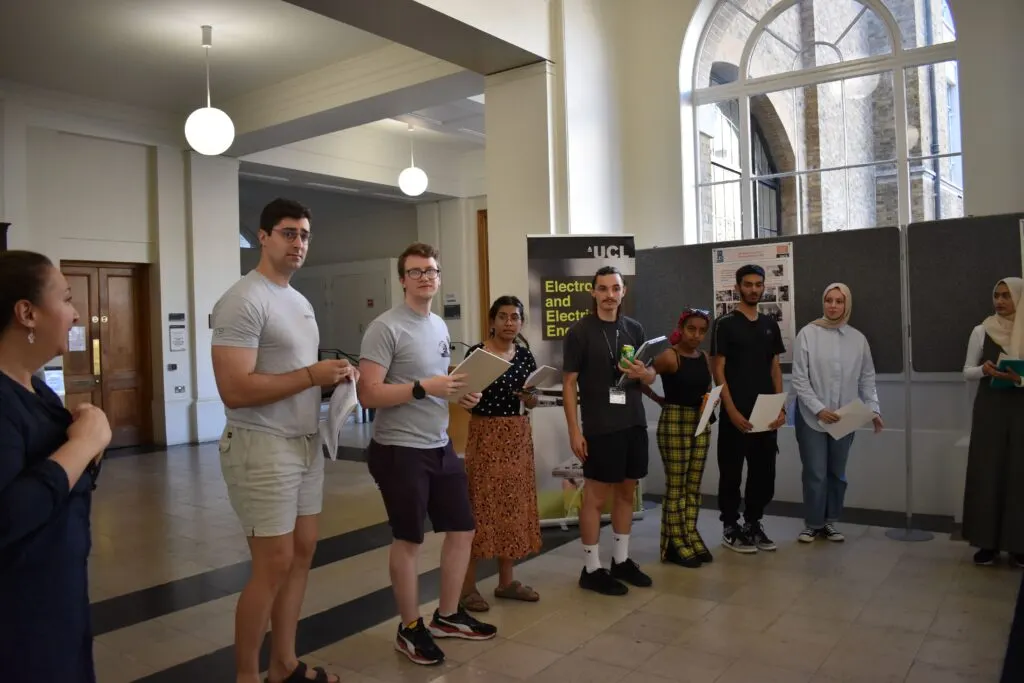
Instead the group is split immediately into small tables with a volunteer on each. The first activity is deliberately low-stakes and non-academic. By the time the English assessment happens — a short piece of writing and a conversation, used only to set the morning groups — the students have already spoken to three or four people.
The first afternoon is a practical, not a lecture. Something visual, something that works, something where nobody in the room has an advantage from having been in a British school. Extracting DNA from a strawberry is the perennial choice for a reason: it takes forty minutes, it produces a visible result, and it does not care what your English is like.
How we keep it safe
A programme working with young people, several of whom are unaccompanied and in local authority care, carries obligations that are not optional. We would rather describe ours plainly than leave a reader to assume.
Consent. Every participant under 18 requires a completed parent, guardian or social worker consent form. It is a separate form from the student application, and both are required for an application to be considered. This is the single most common reason an otherwise strong application is incomplete.
Onboarding for volunteers. Volunteers working directly with young people complete safeguarding onboarding before they are placed. Volunteers are not left alone with an individual student.
A named point of contact. Each cohort has a session coordinator responsible for the day-to-day running of the programme, and a named person to raise a concern with. Students are told who that is on day one.
Dietary and access needs, collected in advance. Lunch is provided for eight days; a programme that provides food it cannot eat has not provided food. Access requirements are asked for at application, not discovered on the day.
Photography by consent. Our gallery and this website use photographs from the summer schools. They are taken by volunteers with consent, and consent can be withdrawn.
None of that is remarkable. It is the baseline, and a programme that cannot describe its baseline is not one to refer a young person into.
What we measure, and what we do not
We are cautious about impact claims, and it is worth being explicit about where the line falls.
What we count exactly. Applications received. Places offered. Attendance across the eight days. Countries of origin. Volunteer numbers and hours. Funds raised and spent. These come from our own records and we publish them.
What we collect qualitatively. Written feedback from students at the end of the fortnight, and from volunteers. It is the richest thing we have and the least generalisable. Several of the quotations in this article come from it.
What we do not know. Where our alumni end up. We have never had the resources to run a proper follow-up study, and any progression figure we published would be a survivorship estimate — the students who stayed in touch are, by definition, the ones for whom things went reasonably well. We would rather have no number than a flattering one.
What we would like to know. Whether the fortnight changes application behaviour, and whether the mentoring year that follows changes outcomes. Answering either properly would cost money that currently buys places, which is the trade-off we have chosen and would revisit with a dedicated grant.
| Measure | Status | Note |
|---|---|---|
| Participants since 2018 | Counted | 105 recorded against the summer school; 133 across all programmes |
| Countries of origin | Counted | 23, plotted on the map on our homepage |
| Applications, 2025 | Counted | 315, for 30 places |
| Volunteers involved | Counted | 54 across the programme’s history |
| Funds raised for delivery | Counted | £41,700 against summer schools, within £50,000+ overall |
| Student satisfaction | Qualitative | Written feedback each year, published in extract |
| Progression to higher education | Not measured | Would require a follow-up study we have not funded |
| Long-term outcomes | Not measured | Same |
Building your own
We are asked reasonably often how to start something similar, usually by university outreach teams or by student societies. The honest answer is that the hard parts are not the ones people expect.
The curriculum is the easy part. Any physics department can fill eight afternoons. What takes the time is deciding what the mornings are for, and holding the line that they are for language rather than more science.
Recruitment is the hard part. Almost nobody finds a programme like this by searching. Building relationships with the social workers, college tutors and refugee support organisations who actually meet these young people takes a year and is the difference between thirty applicants and three hundred.
The money is smaller than you think, and less flexible. Travel and food dominate, they are per-student, and they cannot be donated in kind by a university the way space and equipment can. Budget for full travel coverage from day one or the programme selects the wrong cohort.
Safeguarding is not overhead. It is the licence to operate. Get it right before the first advert goes out, not after the first application arrives.
Plan September before you run August. A fortnight followed by silence wastes most of what the fortnight built. Our mentoring scheme exists because we learned that the hard way.
Common questions
Do students need existing qualifications to apply? No. There is no grade requirement. The programme is designed for young people whose schooling has been interrupted, which frequently means no UK qualifications at all.
How good does their English need to be? Developing is fine. English is taught in level-set groups precisely so that a wide range works. A student who can follow a simple conversation will manage; a student with no English at all would find the fortnight hard, and we would point them towards ESOL provision first.
Is it residential? No. Students travel in daily, and travel across TfL Zones 1–6 is covered.
What if a student can only attend one week? Tell us at application. The two weeks build on each other and full attendance is much better, but we would rather have a student for one week than not at all, and we plan around it where we can.
Who teaches? Volunteers: UCL undergraduates, postgraduates, PhD students and postdoctoral researchers, alongside qualified English teachers. Several are former participants.
Are there places for students outside London? The programme runs in central London and covers travel within TfL Zones 1–6. Students outside that area have attended, but the daily journey becomes the limiting factor and we would want to talk it through before an application.
Programme details are for 2026 and were compiled in January 2026. Dates and deadlines are confirmed on our application page, which is the authoritative version. Participant figures come from Bridging the Future programme records, 2018–2025.
Keep reading
- The GCSE vacuum — why a fortnight in August is aimed at exactly this age group.
- One hour a week — what happens between September and March.
- Where the money goes — the cost of a free place, line by line.
- Gallery — 109 photographs from summer schools between 2019 and 2025.
Sources & further reading
Every third-party figure quoted above links back to its primary source. Where a statistic is our own, it comes from our programme records.
- Department of Physics & Astronomy, University College London
- London Centre for Nanotechnology, UCL & Imperial College London
- The Ogden Trust — physics education, The Ogden Trust
- Travel in London — fares and zones, Transport for London
- Bridging the Future programme records, 2018–2025, Bridging the Future
- Summer school gallery, 2019–2025, Bridging the Future
Spotted something out of date, or have a figure we should include? Write to contact@bridgingthefuture.org and we will correct it.